

This is the second article in my series examining historical patterns across infrastructure buildouts, tech companies, and major economic events for lessons that apply to today's project economy.
The first piece (find it here in case you missed it) explored how AEC platforms commoditize adjacent layers to strengthen their core position (and why, if you're building a product, that's the layer you want to be building in).
This one shifts eras entirely: the canal mania of the 1790s and what separated winners from the wreckage.
Between 1790 and 1810, England witnessed the first modern infrastructure bubble. Most ventures failed spectacularly. A small fraction generated exceptional returns across generations. The difference had nothing to do with superior engineering or better tech.
Curious? Let's dive in!
Transportation as a tax

In the late 1700s, England stood at the precipice of a radical economic shift, yet it remained physically shackled by a transportation network that had scarcely evolved since the Roman occupation.
The dawn of the Industrial Revolution demanded the mass movement of heavy raw materials (e.g. coal for steam engines, iron for machinery, clay for the potteries) but the existing infrastructure was fundamentally incapable of supporting such volumes. Goods were moved primarily via horse-drawn wagons over rutted, unpaved roads that became total mud pits after even moderate rainfall, or via coastal shipping routes that were vulnerable to both the vagaries of Atlantic weather and the threat of French privateers. On land, a single horse could pull at most one ton of cargo in a cart: the resulting "transportation tax" was so high that coal prices doubled for every ten miles they traveled from the pithead. This friction created a series of isolated economic islands, where the potential for industrial growth was permanently bottlenecked by the sheer physical cost of movement.
The structural breakthrough came not from a broad technological innovation, but from a specific tactical move by Francis Egerton, the 3rd Duke of Bridgewater, who sought to connect his landlocked coal mines at Worsley directly to the factories of Manchester. Completed in 1761, the Bridgewater Canal was an engineering feat that bypassed existing river navigations entirely, employing the self-taught engineer James Brindley to construct a "still-water" cut that included a daring stone aqueduct over the River Irwell. The impact of this 10-mile artery was visceral and immediate: the price of coal in Manchester dropped by 50% overnight, as the efficiency of a single horse pulling a 30-ton barge replaced the inefficiency of dozens of packhorses. For the Duke, the project was a financial success, generating reported annual returns of over 13-23% and an income that eventually exceeded £80k (roughly $20m today). This single project (a closed-loop system of mine + canal + market) demonstrated the transformative power (and profit potential) of infrastructure.
Spurred by Bridgewater's success, England plunged into a Canal Mania in the 1790s. For a brief euphoric moment, canals were seen as the surest path to riches. New canal companies sprang up almost weekly, often on the flimsiest of surveys and promises: between 1790 and 1793, Parliament approved over 80 new canal Acts, from only one canal in 1790 to twenty in 1793 alone. Investors from all walks of life (aristocrats, merchants, even modest savers) poured capital into these schemes, chasing projected dividends of 8%, 10%, or higher. In total, roughly 165 canal projects were floated in two decades, authorized to raise over £20m, an astronomical sum for that time (about $2.5Bn billion in today's money). Canals became the era's speculative darling, a first-ever infrastructure bubble in which newspapers hyped routes to riches and canal shares quadrupled in months. The investor frenzy even outpaced the stock market itself: regional exchanges popped up just to trade canal stock, since the London exchange wasn't yet ready.
Yet for all the capital flooding in, reality bit back hard. Many canal ventures failed spectacularly.
Construction often proved far more difficult than promoters promised: costs ran 2x, 3x, even 5x over budget as tunnels collapsed, aqueducts leaked, and inexperienced builders hit unforgiving geology. Grand plans to connect cities were abandoned half-finished when money ran out. For example, the ill-fated Herefordshire & Gloucestershire Canal never paid a penny of dividend to investors, and the Grand Western Canal was never even completed. Dozens of similar schemes ended in bankruptcy sales or simply petered out into stagnant ditches. By 1796 the canal investment boom had visibly soured: war with France broke out, sparking inflation that sent canal share prices crashing back to earth. "Canal script" that had traded at 400% of par value in 1792 fell to near par by 1795, wiping out fortunes. In retrospect, the Canal Mania stands as the first great infrastructure bubble: a frenzy of real engineering achievement interwoven with financial folly. It built critical pieces of Britain's transport network, but it also demonstrated the perennial danger of investors losing their heads over the Next Big Thing.
Understanding the Canal Mania offers a predictive framework precisely because it was history's first large-scale experiment in private-infrastructure financing. It predates the railroad mania of the 1840s and the telecom bubble of the 1990s, yet it established the same recurring lifecycle: a breakthrough success leads to undifferentiated capital flooding the sector, which then creates a "parallel canal" problem of redundant assets.
Today, as we watch billions flow into similar infrastructure initiatives, the same divergence is appearing between the "infrastructure providers" who compete for crumbs and the "resource owners" who control the dwell time and the car.
From viable assets to fiscal sinkholes

The collapse of Britain's canal investments was not a random market accident but a systematic failure rooted in the fundamental mismatch between projected economics and operational reality. At the heart of this disaster lay what might be called the engineering tail-risk problem: the chronic tendency of massive civil projects to exceed budgets by factors that transform viable ventures into fiscal fiascos before the first cargo ever moves.
As mentioned above, canal construction routinely blew past original estimates by 2-500%. Promoters knew this game well, deliberately understating costs to secure Parliamentary approval, only to encounter geological nightmares once excavation began.
The Edinburgh and Glasgow Union Canal offers a textbook example of this dynamic. Originally pitched at a suspiciously precise figure of £240k, the final bill exceeded £461k. This doubling of costs stemmed from the need to construct three massive aqueducts at Slateford, Almond, and Avon, plus a 2,070-foot tunnel near Falkirk, all necessitated by local landowners who refused canal access across their estates. These so-called unforeseen political and geological constraints were actually the hidden debt embedded in every infrastructure project, transforming projected returns into structural losses before operations even began.
The revenue side of the equation proved equally catastrophic, though for different reasons. Canal prospectuses routinely projected cargo volumes that bore no relationship to actual trade flows or regional economic density. Promoters operated on a seductive but flawed assumption: that connecting point A to point B via water would automatically generate thousands of tons of coal and agricultural traffic. The reality delivered a brutal correction. Most canals achieved only thirty to fifty percent of their projected utilization, a gap that made servicing the massive capital expenditure mathematically impossible.
The Thames and Severn Canal exemplifies this revenue shortfall. Completed in 1789 at a cost of £250k (approximately $46m today), it was designed as the primary artery between London and Bristol. But the summit level cut through porous limestone that leaked water as rapidly as pumps could replace it. Cargo stayed with established road and coastal routes because the canal remained closed an average of seven weeks per year due to summer water shortages or winter ice. So, without high utilization to amortize the enormous construction debt, even well-positioned canals quickly transformed into fiscal sinkholes that consumed capital rather than generated returns.
The parallel canals problem delivered a further blow to an already struggling economic model. In the Midlands, competing towns and rival companies constructed redundant, overlapping systems that fragmented available demand across multiple routes. The most absurd manifestation appeared at the Worcester Bar in Birmingham, a physical seven-and-a-half-meter stone barrier separating the Birmingham Canal from the Worcester and Birmingham Canal. Because of disputes over water rights and toll structures, goods arriving in Birmingham required manual unloading from one boat, physical transport across this seven-foot gap, and reloading onto another vessel in the rival system. This lack of interoperability extended beyond Birmingham. Different builders employed different lock sizes and canal depths, ensuring that standard barges could rarely navigate anything resembling a national network. Traffic remained local and subscale, unable to generate the volume economics that might have justified the capital invested.
Maintenance emerged as the silent assassin that nobody properly budgeted for but everyone eventually confronted. Canal operation demands constant dredging to combat siltation, continuous repair of leaky lock gates, and ongoing maintenance of miles of towpaths and embankments. The Kennet and Avon Canal, completed in 1810 for over £1m (approximately $94m today), watched its net receipts of £39k in 1840 evaporate as railway competition arrived. By 1888, gross revenue had collapsed below £6k while the cost of basic functionality exceeded £9.5k, not including debt service on the original construction. Many canals literally became dry ditches within years of opening, as toll revenue proved insufficient to battle the relentless entropy of the English landscape. Early investors treated infrastructure as install-and-forget, discovering too late that rivers love to clog and embankments love to crumble. These unbudgeted maintenance expenses transformed projected five-percent yields into outright losses, with the problem compounding year after year in a vicious cycle of underinvestment and decay.
The final blow arrived as an exogenous shock that rendered even profitable canals obsolete almost overnight. The railway's emergence in the 1830s and 1840s represented a technological leap that fundamentally reset infrastructure economics. Railways moved goods at twenty to thirty miles per hour compared to the two to three miles per hour that barges could manage. Contemporary observers noted that journeys requiring days by canal could be completed in hours by rail, without dependence on horses or large crews and without weather disruptions from winter freezes. When the Edinburgh and Glasgow Railway opened in 1842, running parallel to the Union Canal, passenger and freight traffic dropped by nearly two-thirds almost immediately. The stranded asset risk inherent in infrastructure proved binary: once a more efficient modality secured the route, the previous asset's value collapsed to zero or salvage value. The Kennet and Avon eventually sold to the Great Western Railway for just £210k or roughly one-fifth of its original construction cost, purchased primarily to prevent competitors from using the right-of-way.
The resulting investor carnage was thorough and unforgiving. Roughly four out of five canal enterprises ended as money-losers, most never returning initial capital let alone paying dividends. Thousands of investors who had mortgaged estates or committed savings to canal shares watched their capital disappear entirely. Georgian shopkeepers and landowners alike saw their speculative positions evaporate. Canal share indices fell approximately fifty percent between 1793 and 1795, and the majority of companies never recovered. There were no bailouts, no rescue packages, no government intervention. The fragmented nature of the enterprises meant they were simply absorbed by ascending railway giants or left to decay into artifacts. Some were quietly nationalized in the twentieth century, but original investors were comprehensively wiped out.
This massacre of the middle class stands as the definitive cautionary tale for modern infrastructure and venture capital. The mechanics are not merely analogous to current situations but represent the same fundamental economic failure repeating across time. Today's electric vehicle charging networks exhibit the same pattern - multiple companies building parallel infrastructure in identical locations with high capital expenditure and low utilization. The parallel to canal mania is not metaphorical. It is the mechanical repetition of identical unit economics destined to produce identical outcomes. Infrastructure remains vulnerable to speculative excess and collapse when the fundamental relationship between construction cost, maintenance burden, and revenue generation is structurally flawed from inception.
The canal investors learned this lesson at tremendous personal cost. The question is whether contemporary capital allocators will prove better students of history.
Commoditized tech, uncommoditized chokepoints

Amid the comprehensive destruction of capital during Britain's canal mania, a small fraction of ventures generated exceptional returns that persisted across generations. These winners shared a remarkably consistent architecture that had little to do with superior engineering and everything to do with structural control of irreplaceable assets. The Duke of Bridgewater's operation stands as the definitive example of this model, not because it represented innovative canal construction but because it fundamentally eliminated the demand risk that destroyed competing projects.
The Duke constructed what might be called a closed-loop industrial system rather than a transportation service dependent on third-party traffic. He owned the coal mines at Worsley that generated the cargo, the waterway that transported that cargo, and the distribution infrastructure within Manchester that delivered it to end customers. This vertical integration transformed the economic equation. His returns derived from his ability to move his own product through his own infrastructure at whatever volume his mining operations produced, rather than hoping that independent merchants would choose his route over alternatives. He functioned as his own anchor tenant, guaranteeing utilization regardless of external market dynamics.
This integrated model gained additional protection from geographic constraints that competitors could not overcome. The terrain between Worsley and Manchester, combined with the Duke's early securing of land rights and Parliamentary authorization, created what functioned as a natural monopoly over the most efficient route into the city's industrial core. While other canal operators watched parallel routes fragment their available demand, the Bridgewater Canal represented the only viable pathway for delivering coal directly into Manchester's manufacturing district at approximately half the cost of road transport. This geographic bottleneck generated pricing power that extended beyond toll revenue. Because the Duke controlled the lowest-cost transport route into the most concentrated area of demand, he could effectively set the market price for coal in Manchester while simultaneously extracting economic rent from the canal infrastructure itself.
The financial divergence between this model and typical joint-stock ventures proved dramatic. Historical records indicate the Bridgewater Canal generated annual profits averaging around thirteen percent in the decades following 1806, with peak years reaching twenty-three percent, long after the speculative bubble had collapsed. Compare this performance to the typical fragmented canal project struggling to pay even a five-percent dividend, and the structural difference becomes apparent. The Duke operated what modern observers might describe as a cash-compounding engine, while toll-dependent canals functioned as either zombie enterprises consuming capital to maintain operations or outright bankruptcies.
The Duke's access to patient capital created another structural advantage unavailable to joint-stock companies operating under pressure from impatient shareholders. He financed early construction through personal estates and substantial borrowing, reportedly reducing his household expenditures to minimum levels to sustain the buildout during its most capital-intensive phases. This patience enabled continuous reinvestment in maintenance and operational excellence: his canal remained in full working order for more than a century while competitors' infrastructure degraded through deferred maintenance as revenue-starved operators cut costs. The operational moat widened over time: the well-maintained Bridgewater Canal remained the preferred route even after the Manchester Ship Canal's arrival in 1893 introduced modern competition.
Other successful canal ventures throughout the era displayed remarkably similar characteristics. The Trent and Mersey Canal, positioned to funnel traffic between the Midlands industrial region and Liverpool's port facilities, reportedly delivered dividends of forty-six pounds on every hundred pounds invested during peak years: a staggering forty-six percent annual return reflecting the canal's control of a geographic bottleneck that no competitor could easily circumvent! Canals in regions where multiple possible routes existed faced thin volumes and price competition that made servicing construction debt impossible. The winners also practiced operational excellence that reinforced their competitive position. They reinvested profits to deepen channels, extend branch networks, and maintain year-round reliability, creating a maintenance moat that undercapitalized rivals could not match. The most profitable operations spent liberally on dredging and repairs to ensure continuous navigation, while shoestring competitors closed for winter freezes or flood damage.
These successful operators treated infrastructure as a long-term service business requiring sustained investment rather than a speculative asset to be flipped for quick returns. They possessed patient capital, often aristocratic or industrial family wealth, willing to accept decade-plus payback periods and ongoing maintenance expenses. This separated them fundamentally from the manic investors who expected immediate dividends and abandoned positions when quick returns failed to materialize.
The core insight embedded in these outcomes challenges fundamental assumptions about infrastructure competition. Superior technology provided no meaningful competitive advantage. Every canal represented essentially identical engineering: a water-filled channel equipped with locks and towpaths. No company possessed proprietary construction techniques that delivered lasting differentiation. What separated the twenty percent that succeeded from the eighty percent that failed was control of constrained physical and commercial assets rather than any technical innovation. The Duke of Bridgewater did not invent a novel form of canal. He controlled the only water route from vital coal fields to a major city, plus ownership of the commodity flowing through that route. Similarly, other profitable canals held exclusive rights granted through Parliamentary acts or unique geography. They cornered a resource (whether a route, a source of freight, or a regional mandate) that others could not readily duplicate.
The pattern extends beyond its specific historical moment with direct implications for modern capital allocation. The technology component of canal operation (the barges, the water, the lock mechanisms) functioned as a commodity. Hundreds of engineers throughout Britain in 1800 possessed the technical capability to construct functional canals, yet eighty percent of projects failed because they lacked the cornered resource. The Duke's competitive advantage derived not from superior engineering but from the combination of a strategic route and integrated demand that guaranteed utilization regardless of external market conditions.
This represents the definitive signal amid the noise of infrastructure buildouts. The critical question is not who possesses the most impressive hardware or engineering talent, but rather who controls the chokepoint and the anchor customer that ensures utilization.
Control the chokepoint, and you control the entire game.
Modern equivalents (an example)
Now, here's a provocative claim: the same pattern of infrastructure overinvestment that destroyed canal investors in the 1790s is currently unfolding across different sectors today.
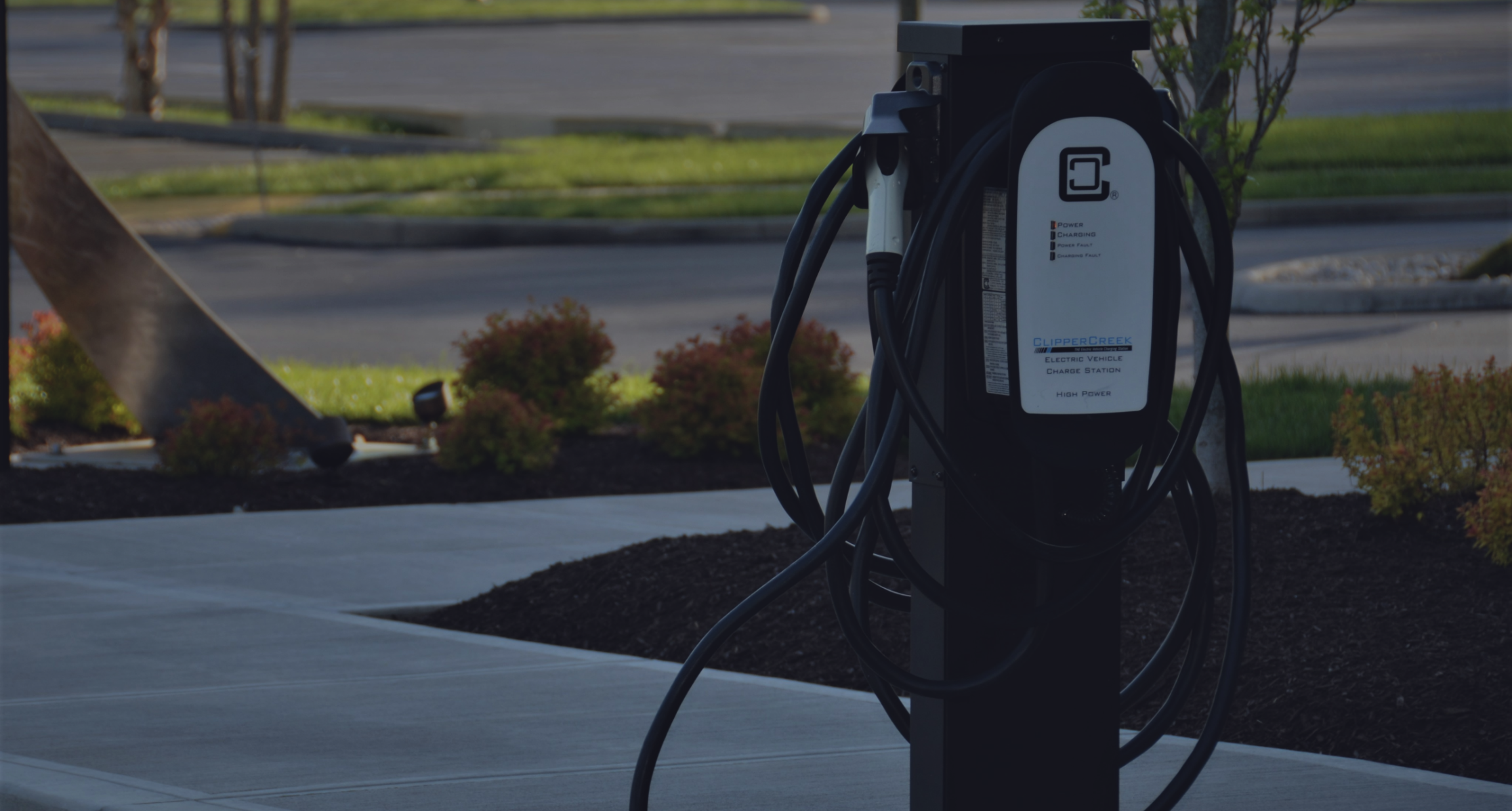
One obvious parallel exists in electric vehicle charging infrastructure. An even more contentious comparison might be drawn to datacenter buildouts, though that discussion deserves its own analysis. For now, let's focus on EV charging (although important structural differences complicate any simplistic historical parallel, and therefore, this parallel holds only partially and comes with its own nuances).
Between 2020 and 2025, capital flooded into the EV charging sector with significant velocity and volume. Venture capital, corporate balance sheets, government mandates, and SPAC offerings combined to pour tens of billions into charging infrastructure globally. The United States government alone allocated seven and a half billion dollars through the 2021 infrastructure legislation to build a national charging network, while the European Union mandated fast chargers every sixty kilometers on major highways. Private investors piled capital into dozens of startups and established players (e.g. EVgo, ChargePoint, Electrify America, Volta, Ionity, and others), all racing to install stations based on a narrative that positioned early infrastructure builders as inevitable winners in the electric future. International Energy Agency data indicates that public charging points doubled worldwide between 2022 and 2024, expanding from roughly two and a half million to five million units. This represents infrastructure mania in its purest form: a rapid buildout driven by a combination of genuine anticipated need and speculative conviction that whoever constructs the network first will capture outsized returns.
A single high-power DC fast charger costs between $25k and $50k for hardware alone, but the all-in installation cost (including electrical service upgrades, permitting, trenching, and grid connection work) can reach $100k per unit. Like the canals, these represent fixed-cost assets with low marginal costs, meaning they require utilization to generate returns that justify the capital expenditure (still, the overall CAPEX per location is significantly smaller, and I must acknowledge this!). Industry analysis suggests a public charger typically requires approximately 20% utilization to reach profitability; however, most installations remain nowhere close to this threshold: as of 2025, nationwide average utilization for fast chargers hovers around 15%, with nearly 90% of new stations failing to meet even that modest benchmark in their initial three months (an analysis of nearly 900 newly installed fast-charging stations in the United States found that 63% achieved less than 5% utilization during their first ninety days of operation).
The revenue challenges extend beyond simple utilization problems. Electricity itself, particularly for fast charging installations, often comes with demand charges that consume 50-80% of gross margin. Additionally, maintenance costs proved significantly higher than operators projected. Vandalism, connector wear and tear, and software failures plague the networks, producing reliability rates for non-Tesla installations that frequently dip below eighty percent. Comprehensive reviews of United States charging stations revealed that at any given time, roughly one in five chargers sits out of order, delivering an average reliability score of 78% (which is substantially worse than traditional fuel pumps). Without the sustained utilization necessary to amortize capital expenditure and return profits before the next generation of higher-powered hardware renders existing installations obsolete, these stations function as the electric age equivalent of dry ditches: assets that consume capital rather than generate returns.
The parallel canals problem has manifested visibly at major intersections across the country. It has become routine to encounter three or four competing charging networks (Electrify America, EVgo, ChargePoint, plus local utility installations) at different corners of the same commercial intersection, each fragmenting the available demand among multiple providers. If a single network could capture concentrated demand and achieve 40% utilization, profitability would be achievable. When four networks each capture 10% utilization, all lose money. This land grab for locations makes strategic sense for individual companies operating in isolation but destroys industry-wide economics, transforming the sector into an attrition game where only the most capitalized or strategically positioned players can survive the consolidation phase. California shopping centers frequently host three different fast-charging brands in adjacent parking lots, each operating at utilization rates that guarantee losses. The fragmentation simultaneously creates both gluts in EV-dense regions and charging deserts across vast swathes of less-traveled territory.
The cornered resource in this contemporary example is not the charger technology itself but rather the prime dwell-time location. High-value sites are those where customers naturally spend thirty to sixty minutes engaged in other activities, such as shopping centers, apartment complexes, highway rest stops along major travel corridors. There exists a finite number of Walmart parking lots, which sit within ten miles of 90% of the United States population, or Starbucks locations with adjacent parking. Companies securing exclusive site agreements for these locations are cornering the modern geographic monopoly. Walmart's decision to construct its own owner-operated network at thousands of locations by 2030 represents the quintessential contemporary version of the Duke of Bridgewater's integrated model: Walmart owns the land, controls customer dwell time through its retail operations, and can offer charging rates that third-party networks paying site lease fees cannot economically match.
Tesla's Supercharger network provides the definitive validation of the canal framework's continued relevance. Tesla operates a vertically integrated model where it owns the vehicle producing the demand, the charging infrastructure serving that demand, and the software directing customers to its own facilities. This integration enables industry-leading reliability rates of 95-99% and substantially higher utilization because Tesla's navigation systems funnel drivers directly into company-owned infrastructure. By 2025, Tesla Superchargers averaged approximately eight charging sessions per stall per day, among the highest rates in the industry, achieved with minimal downtime: this utilization advantage translates directly into superior unit economics. Tesla secured thousands of premium locations along major highway corridors before substantial competition materialized, creating a geographic moat that has forced traditional automakers, including Ford and General Motors, to adopt Tesla's connector standard simply to provide their customers access to the network. Like the profitable canal that absorbed traffic from failed competitors, Tesla's infrastructure is consolidating its position as the essential chokepoint for electric vehicle energy delivery.
The emerging pattern suggests that operating as one of five interchangeable providers on the same corner will likely prove unsustainable. The charging networks that survive will be those that either own the customer through vertical integration or own the best real estate through physical or contractual monopoly (still: I think that there are so many prime dwell-time "parallel" locations, that monopolizing all of them becomes a gargantuan feat for any single player). Everyone else is constructing "parallel canals" destined for consolidation or failure.
That said, as I anticipated above, an objective assessment here requires acknowledging meaningful differences between the canal experience and contemporary EV charging infrastructure. The canal was ultimately replaced by a superior technology (the railway) that rendered existing infrastructure largely obsolete. Electric vehicles, by contrast, represent the emerging technological standard replacing internal combustion engines rather than an intermediate solution awaiting disruption: demand for EV charging services appears likely to grow substantially rather than collapse as it did for canals, since electric vehicle adoption continues to expand globally, driven by regulatory mandates, improving vehicle economics, and manufacturers' commitment to electric platforms. Hence, the question is not whether charging demand will materialize but whether the infrastructure buildout has raced so far ahead of demand growth that a significant portion of installed capacity will never generate adequate returns before obsolescence or competitive displacement.
It's the timing mismatch between infrastructure deployment and demand realization that creates the fundamental risk: canal investors bet on traffic that never materialized at projected volumes, while EV charging operators are betting on adoption curves that may take longer to develop than capital patience allows, particularly when installations sit idle waiting for the fleet transition to reach critical mass. The difference lies in the probability of eventual demand rather than its complete absence. Many canal routes served regions that would never generate sufficient trade volume regardless of how long investors waited. Most EV charging locations will eventually see increasing utilization as fleet electrification progresses: the question is whether current operators can survive the capital consumption period before that utilization arrives, and whether returns will justify the invested capital given the competitive fragmentation of available demand. (Can this same logic be applied to datacenter buildouts? Maybe.)
The lesson from canal mania remains instructive even acknowledging these differences.
Infrastructure built ahead of concentrated demand, without control of either the constrained resource or guaranteed utilization, faces brutal economics that destroy capital regardless of long-term sector growth. Technology represents merely the entry ante: the prize remains control of the chokepoint (the strategic location, the captive customer base, the integrated model that eliminates dependence on third-party traffic). History suggests the sorting process will be ruthless and the casualty rate high, even as the underlying secular trend toward electrification continues advancing.
Resource cornering (for the win)

Looking across infrastructure buildouts from the canal era of the 1790s through today's EV charging deployments, one pattern emerges with striking consistency: the ventures that generate sustainable returns don't win on technology (alone). They win on control of scarce resources that can't be replicated through superior execution or additional capital. Technology itself functions as a commodity, vulnerable to obsolescence and competitive copying. In 1800, any competent civil engineer could design and build a functional canal using established techniques. In 2025, any well-capitalized startup can source power modules and install charging stations in retail parking lots. The real competitive advantage lies not in the infrastructure deployment itself but in cornering the constrained assets that determine who actually captures utilization and pricing power.
From this perspective, three distinct resource types separate the infrastructure winners from the bubble participants.
The first resource type centers on physical scarcity, which creates what might be called a geographic moat. This involves locking down strategic locations, rights-of-way, or infrastructure interconnections that competitors simply cannot replicate due to geographic limitations or regulatory constraints. The Duke of Bridgewater's route connecting Worsley to Manchester operated as a natural monopoly because terrain and early land acquisition created barriers that parallel canal construction could never overcome. The modern equivalent shows up in scenarios like a datacenter securing a hundred-megawatt substation agreement in Northern Virginia, where grid capacity represents the binding constraint on facility deployment. Pipeline operators securing rights-of-way through mountain passes or under major rivers establish corridors that competing infrastructure simply cannot duplicate without prohibitive engineering costs or insurmountable permitting battles. Physical scarcity delivers a sustainable advantage precisely because it can't be overcome through better operations or more capital. The location itself becomes the asset, and controlling that location determines market position regardless of how well the infrastructure actually operates.
The second resource type revolves around contractual monopoly, which functions as a utilization moat by transforming speculative infrastructure into predictable cash flows. This means securing exclusive, long-duration agreements that guarantee utilization/demand and de-risk the massive upfront capital expenditure inherent to infrastructure deployment. Historical canal companies obtained Acts of Parliament granting exclusive navigation rights on specific rivers, using legal barriers rather than physical ones to preclude competition. Another manifestation involves locking in dominant regional customers whose geographic footprint effectively monopolizes an area/industry (this works for SaaS, too). Contractual monopolies eliminate the risk that customers defect to parallel alternatives once it becomes available. They convert optional routes into mandated channels, allowing operators to amortize investments with far greater certainty than ventures dependent on winning customers through open competition.
The third resource type is vertical integration, which creates an ecosystem moat through simultaneous ownership of supply, distribution, and demand (we'll talk about this in a future article). The Duke owned both the coal mines generating cargo and the canal transporting that cargo to market. Tesla owns both the vehicles creating charging demand and the Supercharger infrastructure serving that demand. This integration eliminates dependence on third-party traffic and ensures the infrastructure maintains a captive anchor tenant from day one. Amazon's ownership of its last-mile delivery network and warehouse infrastructure represents the contemporary gold standard, guaranteeing that logistics assets never face the utilization risk plaguing third-party logistics providers hoping to aggregate sufficient volume across multiple clients. Vertical integration fundamentally restructures the risk profile by transforming infrastructure from a speculative bet on future third-party demand into an integrated component of a self-reinforcing system where each element drives utilization of the others.
That said, this framework shows that being the first to deploy infrastructure means nothing if you're merely installing commodity technology in undifferentiated locations. What matters is being first to corner one of the three scarce resources before competitors recognize its strategic value. The disproportionate advantage of moving first appears specifically in the window where scarce resources remain available but their strategic value hasn't been fully priced into acquisition costs or competitive dynamics: the first mover that recognizes a geographic chokepoint, a contractual monopoly opportunity, or a vertical integration pathway can often secure those positions at costs that reflect their current utilization rather than their future strategic value. By the time the second or third mover enters the market, the best locations carry exclusive agreements, the dominant customers have signed long-term contracts, or the vertical integration opportunity has been foreclosed by a competitor controlling the full stack.
The timing advantage compounds because infrastructure assets typically operate under multi-decade horizons: once the first mover locks up the constrained resource, they can defend that position for 20+ years before lease expirations or contract renewals create an opening for competition (see: mining).
This dynamic explains why capital availability represents a necessary but insufficient condition for infrastructure success. Moving first without sufficient resources to actually corner the scarce assets produces no advantage whatsoever. The strategic imperative combines both elements: move early enough to access scarce resources before they're recognized as such, and possess sufficient capital to actually lock them up before the window closes.
Conclusions
The lesson from canal mania cuts through two centuries of technological change because the underlying economics haven't fundamentally shifted. Infrastructure requires massive upfront capital, generates returns only through sustained utilization, and becomes commoditized unless protected by structural moats.
The ventures that survived weren't the ones with superior engineering or faster deployment, they were the ones that cornered scarce resources before anyone else recognized their strategic value.
This pattern has repeated across every major infrastructure wave since. The railway winners of the 1840s controlled terminal access in London, not locomotive technology. The telecom survivors of the 1990s held spectrum licenses and last-mile customer relationships, not superior fiber optic cable.
Today's infrastructure winners will be the ones that lock down geographic chokepoints, secure exclusive contractual monopolies, or vertically integrate to guarantee their own utilization. Everyone else is "building parallel canals". The difficulty of securing these resources is precisely what creates the moat. That's why they're worth pursuing.
If you're building in infrastructure or the project economy, reach out to us at Foundamental - we'd love to hear what you're working on!
More appetite for this type of content?
Subscribe to my newsletter for more "real-world" startups and industry insights - I post monthly!
Head to Foundamental's website, and check our "Perspectives" for more videos, podcasts, and articles on anything real-world and AEC.