

Alright, that title was designed to provoke you into clicking. So if you're reading this, I guess it worked. However, here's my (controversial?) claim underneath it: I think it's actually correct. With caveats, at least! So, bear with me and let's dive in.
Walk into any conversation about construction technology and you'll hear the same framing: the industry is huge, it's under-digitized, and whoever builds the software to fix that captures a generational prize.
The market is, in fact, real. My contention, however, is that the prize, for most of the companies chasing it, is not. Or, at least, not in the form they think.
Because here's the thing about selling software into construction and the broader project economy: the software is almost never where the money is. It sits next to the money. It watches the money move. And then it collects a rounding error while 97 percent of the value flows past it to someone else.
Here’s my (controversial?) claim: a large share of software sold into the project economy will never capture meaningful value as software. The software is a wedge: on its own, it earns a thin slice, a small subscription billed against a tiny IT budget. Its real job is to embed itself into the customer's workflow, become indispensable, and then graduate to a fat slice by intermediating what actually flows through that workflow, such as the procurement of materials, equipment, subcontracted labor, and the financing wrapped around all of it. The software is the toll booth: it is not the road, and it is not the cargo. It just sits at the chokepoint and takes a cut of everything that passes.
Let's dive in.
Software isn't where the budget is
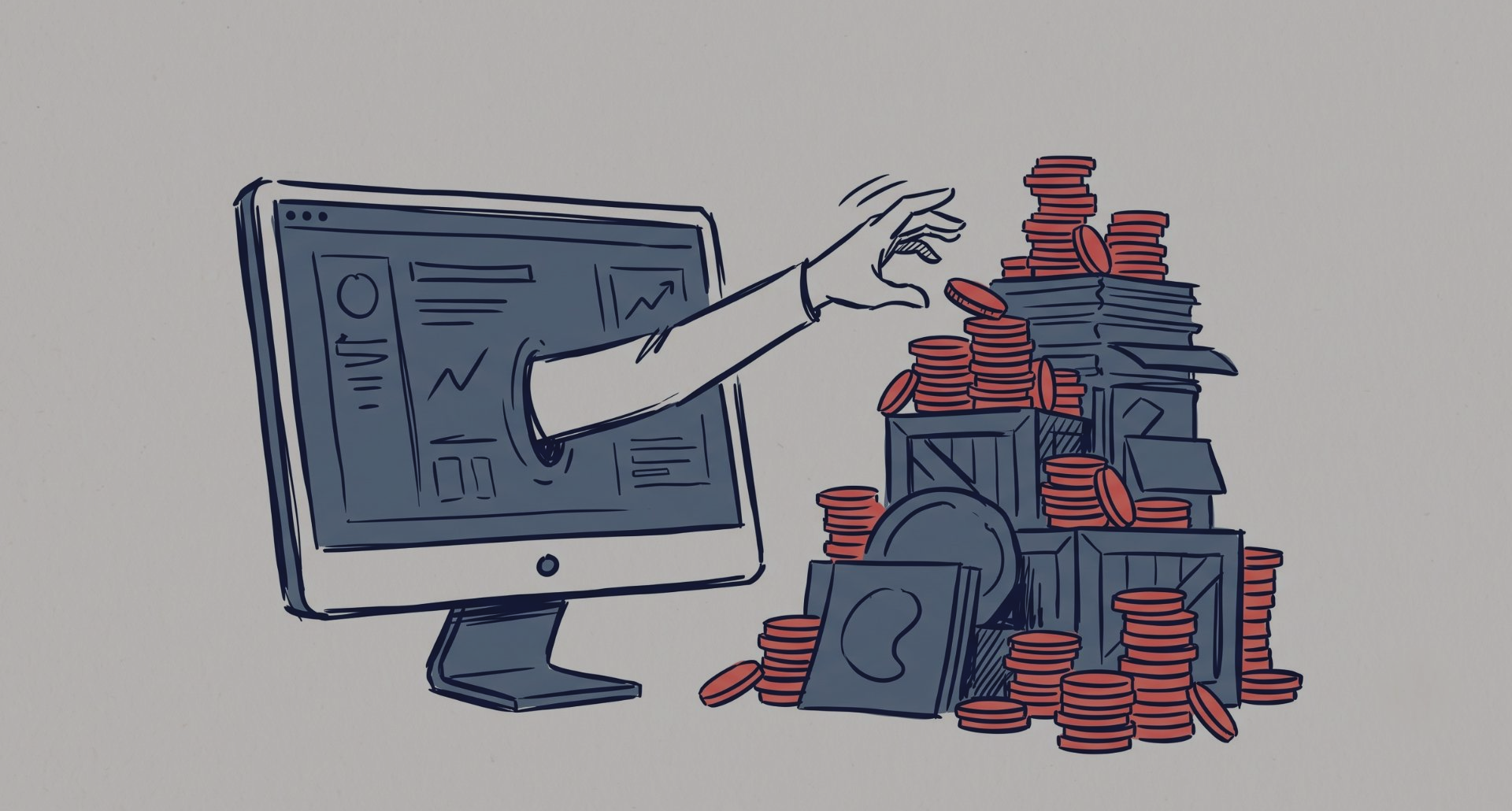
Start with the only thing that matters, which is the customer's P&L statement.
On a typical construction project, software and IT combined are somewhere in the range of 1 to 3 percent of total project cost. The vast majority of the other 97-plus percent is materials, labor, equipment, and subcontracted work, including the design, engineering, and specialist trades that a general contractor orchestrates rather than self-performs. That's the shape of the spend. Concrete, steel, formwork, cabling, fixtures, fittings, the crews who install them, the machines that move them, and the credit that lets everyone wait three months to get paid.
Now think about what a pure-SaaS ConTech company is doing. It is competing (fiercely, against a swarm of other tools) for a sliver of that 1 to 3 percent. And not even all of it: a single tool is one line item inside an IT budget that already has an ERP, an accounting system, a scheduling tool, a document management platform, a BIM authoring license, and now fourteen point solutions that each promise to fix one workflow. Therefore: you are not fighting for 1 to 3 percent, but for a fraction of a fraction.
Now, don’t get me wrong: there are software businesses in this industry that make a great living off that sliver, like Autodesk, Bluebeam, Procore. I'll come back to them in detail at the end, but notice what those names have in common: they are at the very top of the category. They define the file, the markup standard, the project record. They have the kind of workflow lock-in and brand that lets them price like infrastructure. For the other 99 percent of founders (the ones who are not going to become the canonical authoring tool or the canonical system of record) the sliver is, in my opinion, a trap. (Note: you can build really great SaaS companies that exit them for life-changing amounts in AEC-tech: the incumbents have only innovated through acquisition, so this mechanic is well known and a thesis for many founders; it’s clearly not easy, but it has happened many times over!).
And the trap is getting worse, for two reasons.
The first is AI: AI is compressing software differentiation fast. When the marginal cost of building a competent point solution falls toward zero, the moat that used to come from "we built a really good tool" evaporates. If your differentiation is the software itself with not-so-high barriers to entry, you are now standing on ground that is dissolving under you. This doesn't mean software is worthless: it means software-as-the-source-of-pricing-power is a deteriorating asset, and you should plan accordingly.
The second reason is geography. Some context: I’ve spent a good part of my tenure at Foundamental looking at emerging markets. Now, take a market like India: willingness to pay for software is structurally low. Not "low because the market is immature and it'll grow up". Low because the economics of the customer don't support it and probably never will at Western multiples. This is not a defect to be engineered around: it's just a structural fact to be respected. And once you internalise it, the entire question changes: if the customer won't pay much for software, then the software cannot be the product. It has to be the wedge into something they do pay for. And what they pay for (what consumes 97 percent of their spend) is the stuff that physically flows through the project: materials, equipment, labor, and the money that finances all of it.
So the P&L reality leads to a simple conclusion. If you want real value capture in this industry, you cannot stay where the budget isn't. You have to migrate to where the budget is. The software is how you get there.
Graduating from the thin slice to the fat slice
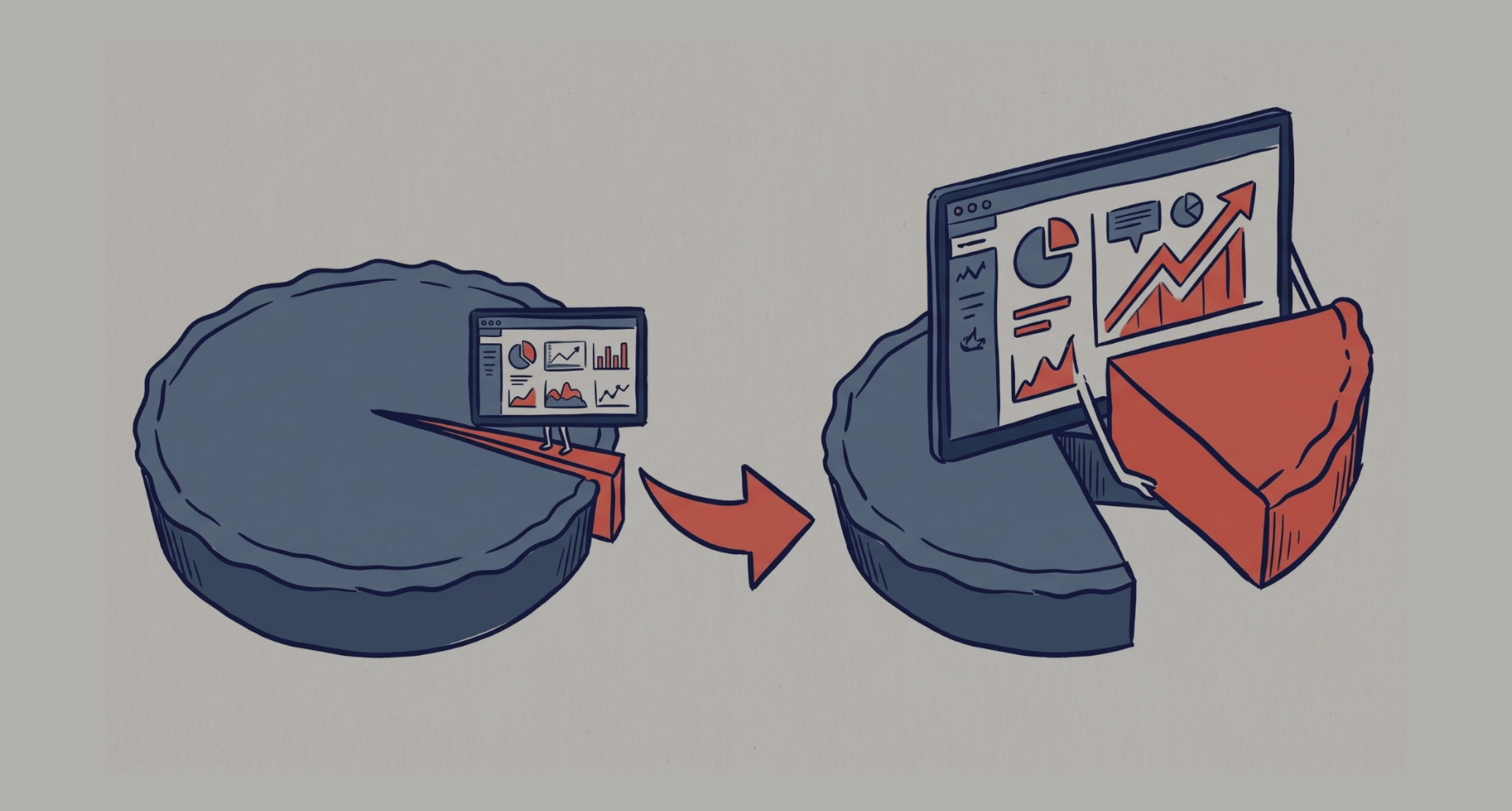
Let’s discuss the mechanism.
Imagine you sell a piece of software to an architecture studio, or a general contractor, or a specialty MEP contractor. It does something genuinely useful, e.g. it manages their material takeoffs, or their submittals, or their procurement requisitions, or their project accounting. You charge a modest subscription. The customer pays it because the tool saves them time and reduces errors. So far, this is a normal, unremarkable SaaS business. You're collecting your thin slice off the IT budget, exactly as described above.
But something else is happening that's far more interesting than the subscription. Because of what your tool does, you now sit inside the moment where the customer decides what to buy. The MEP contractor uses your tool to figure out that they need 4,000 meters of a particular gauge of cable, 200 junction boxes, a list of fittings. The takeoff lives in your software. The requisition is generated in your software. The purchase order, the approval, the comparison of supplier quotes - all of it passes through the surface you built.
That is the chokepoint. You are now standing at the exact point in the workflow where 97 percent of the money gets committed, and you have three assets that almost nobody else has.
First, workflow embedding. You're not a tab the customer opens occasionally. You're the place where the buying decision actually gets made.
Second, trust. You've already earned the right to be in the room. The customer relies on you for accuracy. When you say "here's what you need and here's where to get it", that carries weight.
Third, data. You can see what this customer buys, how often, in what quantities, at what prices, with what seasonality, and (critically) across many customers. You know the real demand curve for a given product in a given region before any supplier does. That is an information asset that a pure distributor would kill for, and you got it for free as a byproduct of running the software.
Now you make the move. Instead of just recording the purchase order, you fulfill it. The contractor clicks "buy" inside your tool, and the materials show up. You've gone from charging a subscription on the IT budget to taking a margin on the materials budget. And the materials budget is fifty times larger.
This is the graduation from the thin slice to the fat slice. And the reason the software earned the right to sit there is precisely those three assets.
That said, the progression has a natural sequence.
Stage one: the recording layer. You're software. You see the flow but you don't touch it → thin slice.
Stage two: the transaction layer. You start intermediating the purchase. The contractor buys through you and you take a distribution margin (small, because in commodity B2B that margin is genuinely thin, usually low single digits), but it's a margin on a number that's vastly larger than your subscription.
Stage three: the financing layer. This is where it gets serious, because in this industry, everyone is waiting to get paid. The subcontractor finances the GC, who's waiting on the owner's draw. The retailer finances the electrician. Working capital is the binding constraint on the whole chain. So when you sit at the transaction, you can also offer the credit (pay the supplier now, let the contractor pay you in 60 or 90 or 120 days) and earn the spread. The distribution margin is thin, but the financing margin can be fatter.
Stage four: owning the supply. This is the endgame: you stop taking a cut of other people's products and start selling your own, under your own brands, manufactured to your spec. You capture the full margin instead of a take rate. This is where the real money is, and it's also where the business stops being anything like the software company you started.
To summarize, that's the arc: recording → transacting → financing → owning. Each step moves you closer to where the money is, and each step takes you further from where you started: the software was only the wedge that cracked the door.
That said, describing the move is the easy part: drawing the arrow from "we have the workflow" to "therefore we capture procurement" takes about four seconds on a slide, but actually doing it is a way different problem.
Before we get into the nitty-gritty of it, let me share one example.
An analogy from another industry
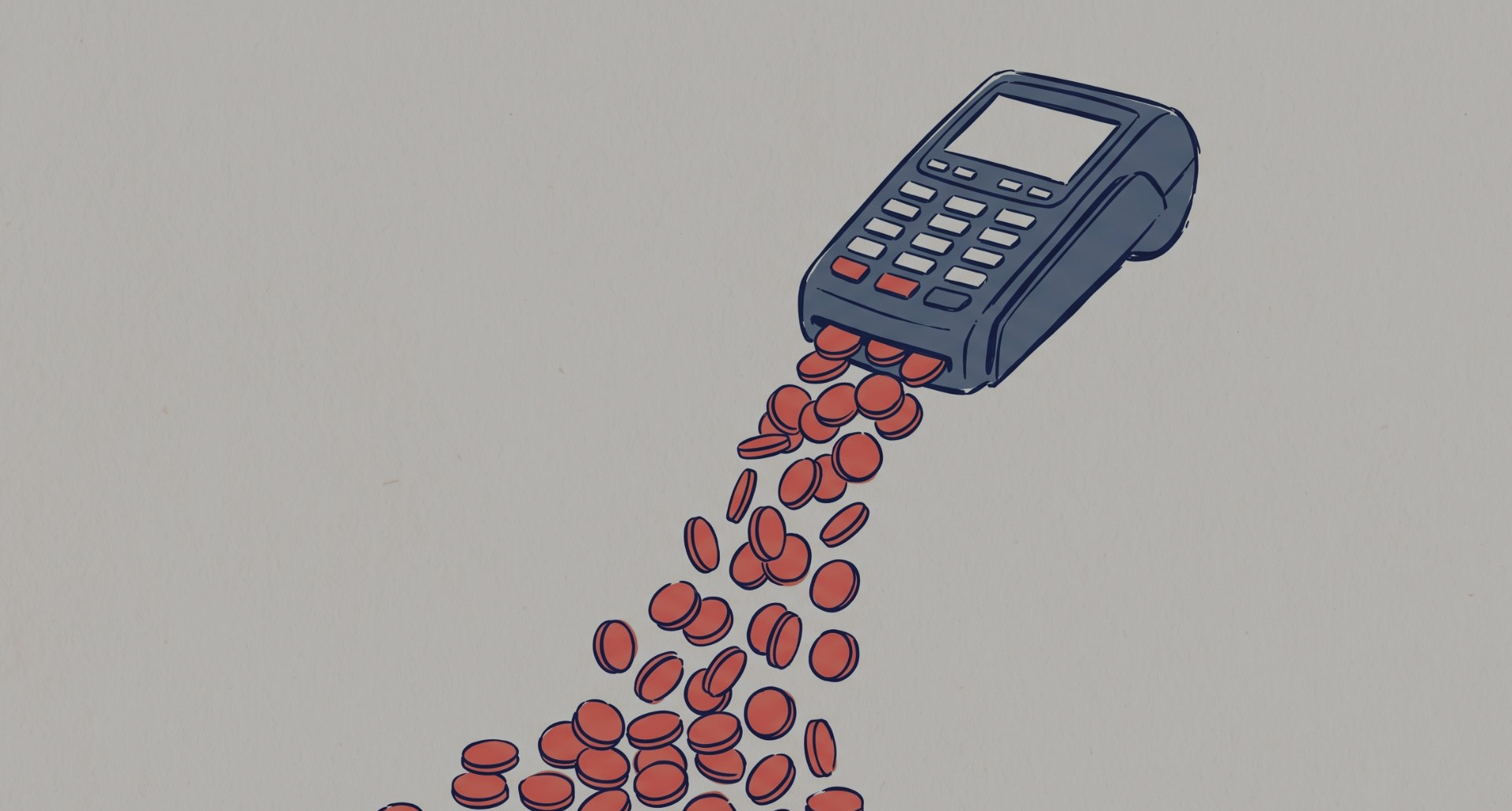
Take Toast.
Toast sells restaurant point-of-sale software. That's the wedge: the screen the waiter taps, the system that runs the menu and the orders and the back office. It's genuinely good software, and restaurants pay a subscription for it. If Toast were a SaaS company, that subscription would be the story.
But as it happens, it is not the story.
Look at the 2025 full-year numbers: the subscription software line was about $936m dollars, or around 15% of total revenue. The financial technology line, which is overwhelmingly payment processing, plus a lending arm called Toast Capital, was about $5.04Bn. That's roughly 82 percent of revenue. The fintech line is 5.4 times larger than the software line. Across roughly 149,000 restaurants, Toast earns something like 6,300 dollars a year per location from software, and something like 34,000 dollars a year per location from fintech. The same customer pays Toast about five times more through the toll booth than through the product.
Ironically, the hardware (the actual terminals) is sold at a deliberate loss ($180m of revenue against $400m of cost). Toast loses money on the hardware on purpose, because the hardware is part of the wedge: it's a customer-acquisition cost dressed up as a product line. You get the restaurant onto the system as cheaply as possible, because the system isn't where you make money: the toll booth is.
Now, payments is a low-margin business: the fintech line runs around 23 percent gross margin versus about 72 percent on software, because most of what flows through payments goes straight back out as interchange and network fees. The actual net take Toast keeps on payment volume is something like 58 basis points: roughly 48 on payments themselves and around 10 on Toast Capital and the rest. On nearly $200Bn dollars of payment volume, those basis points add up to a lot of gross profit, more in absolute dollars than the software line generates (1.7 times).
Shopify is the same movie: subscription software at around $2.75Bn, merchant solutions (payments plus Shopify Capital) at around $8.8Bn, with Shopify Capital alone originating over $4Bn in loans in a single year.
Does this transfer one-to-one to construction? No, that’s also not the point. The point is that the logic transfers perfectly: software as the wedge, the flow as the prize.
Distribution is the only "moat"
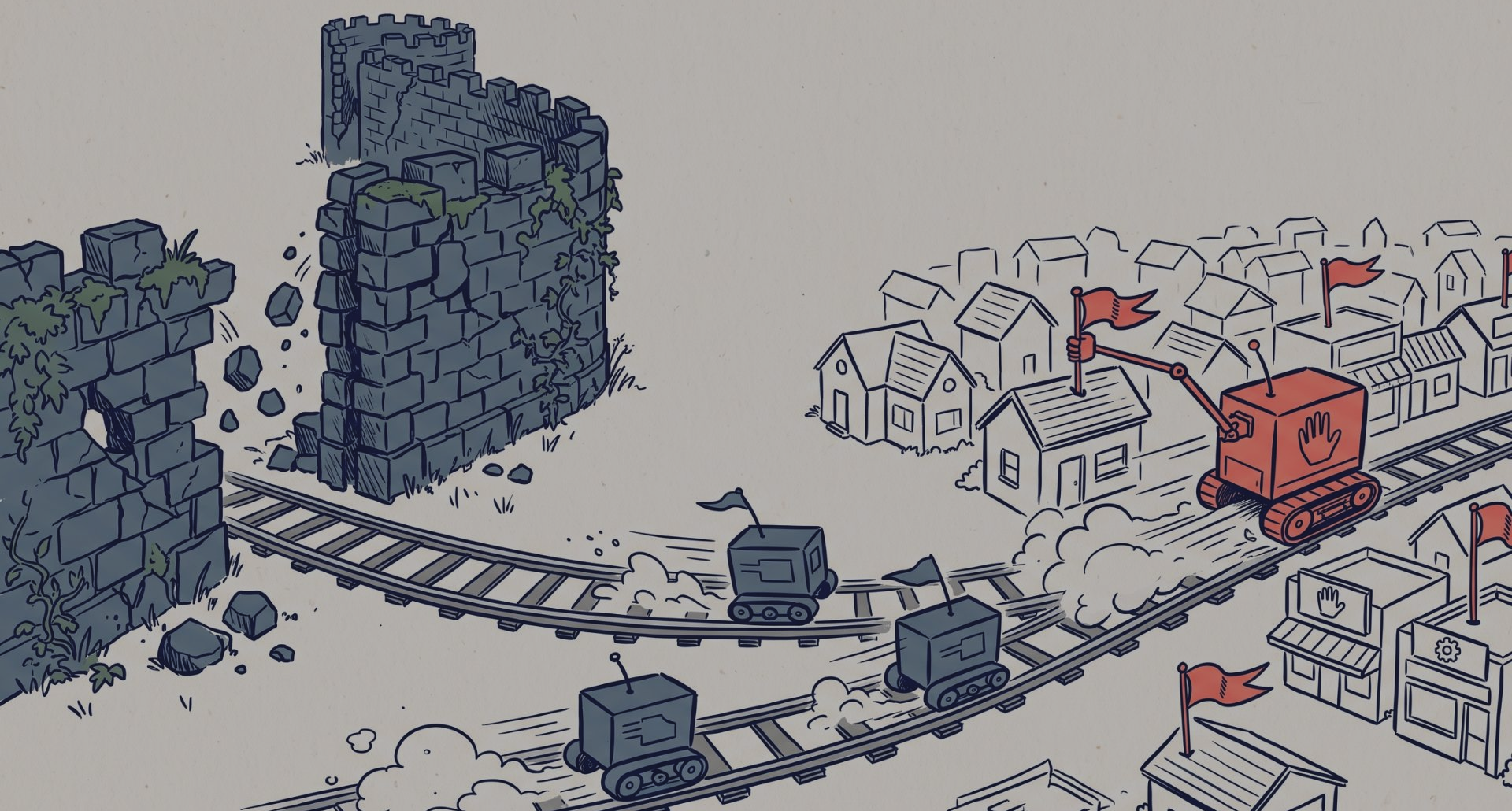
Now, once the software is just a wedge, your defensibility is genuinely unclear.
Usually, your moat isn't the software. Of course, if you've built something genuinely hard (e.g. real technical depth, a feature set that takes years to replicate, an actual R&D moat) then clearly the software can be the value (this is the Autodesk-and-Bluebeam end of the spectrum). But be honest about which end you're on. Most software in this industry isn't that: it's a point solution that is useful, but not hard to build. And for that stuff, the software was never the moat. AI is eating the differentiation quarter by quarter. If your defense is "our tool is better", and better is something a funded competitor clones in a quarter, you've already lost.
As such, the only honest advantage you can have is speed, or better, distribution (often an afterthought, for some reason). The moat in this game is not a wall you build once and sit behind. It's a race you have to keep winning. Your defensibility comes from distributing the wedge as widely and as fast as you possibly can, converting that install base into procurement flow before anyone else gets embedded, and then using the resulting flow and data to keep widening the gap faster than competitors can close it.
This means that first, you race to get embedded everywhere: the wedge only works if you're the default. So you distribute the software aggressively: cheaply, even free (e.g. the way Toast eats the hardware loss) to become the surface where buying decisions get made across as many customers as possible. You make the software abundant and near-free so that the flow becomes scarce and yours. You're not trying to extract maximum subscription revenue here, but rather, you’re trying to win position: every customer you embed is a future toll boot.
Second, you race to convert. Winning the workflow is worthless if you stop there: the instant you have the workflow, you turn it into the channel through which they buy. The conversion from "I see your flow" to "I am your flow" has to be fast, because an embedded competitor who's already taking the transaction is far harder to dislodge than one who's just recording it.
Third, you race on data. Every transaction teaches you something, e.g. real demand, real prices, real seasonality, real default behavior on the financing. The more flow you have, the more you know → the more you know, the better you buy, the better you finance, the better you price → wins you more flow. That loop is hard to copy if you're far enough ahead.
The result is that the companies that win this are not the ones with the best software: they're the ones who got embedded everywhere first, converted the flow fastest, and built the data lead before anyone else could.
The endgame
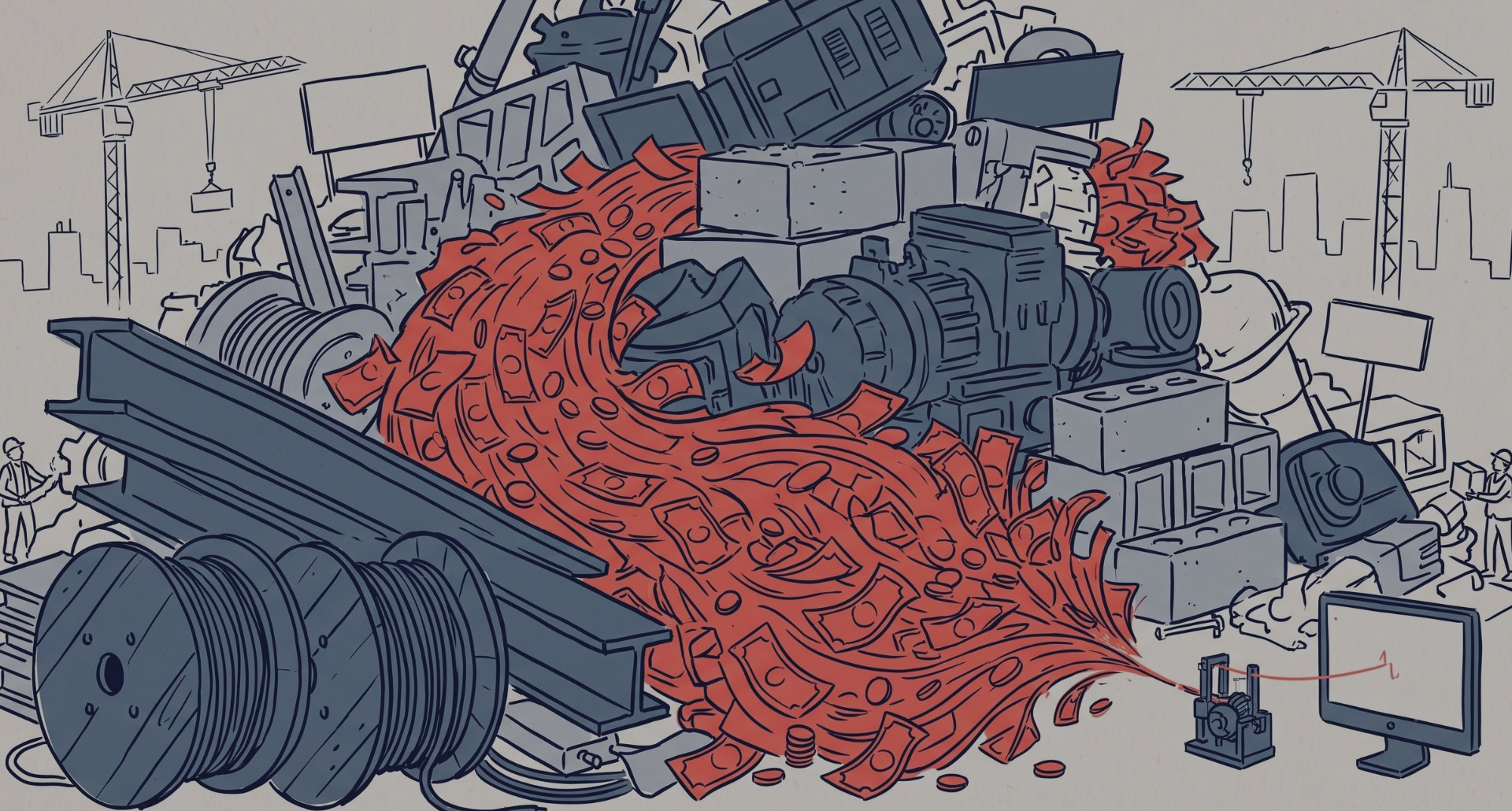
If you run the whole arc (wedge, flow, financing), the natural next step, the one where the real money lives, is to stop intermediating other people's business and start owning it yourself.
There are two things you can disintermediate. First, you can disintermediate the product: stop passing other people's goods through your platform for a take rate and start owning the supply (e.g. your own brands, your own contracted/cloud manufacturing) so you capture the full spread instead of a sliver of it. Alternatively, you can disintermediate the financing: stop handing the credit decision to a bank or a factor sitting next to your flow, and become the lender yourself, underwriting the same transactions you already see better than anyone, and keeping the interest margin instead of watching someone else earn it off your data. Most of the durable outcomes end up doing both, because they reinforce each other (or because you are forced to, if you are the supplier of record for physical products): owning the product gives you a cleaner asset to lend against, and owning the financing lets you push more of your own product.
Take the product first. I've written about this before as cloud manufacturing, and the logic is unchanged: once you've aggregated enough predictable demand through your platform, you can keep handing it to suppliers (distributors, retailers, etc.) and skimming a thin distribution margin, or you can pull that demand into products you control and keep the whole spread. Once you own the demand, not owning the product is leaving money on the table. This need not be true only for commodities, although they can be the primary entry point. As a matter of fact, gross margin and the return on capital actually get better as you climb the long tail into higher-value, still-standardizable categories: tiles, electricals, fittings, sanitaryware, finishes. The real gate here is, in my opinion, working capital dynamics.
Now the financing fork, whose gate is structure and craft. The pull is obvious: distribution margin in commodity B2B is 2 to 5 percent, but the net interest margin on financing the same flow is 6 to 10 percent on secured paper. In practice a commerce business runs a sub-3-percent net margin while the lending arm sitting on the same customers runs north of 20, and the financing layer throws off most of the group's profit on a fraction of its revenue. But lending is hard in a way software never is. Three things have to be true. First, the underwriting is the product: knowing which invoice, which payer, and when in the project to lend. The skill compounds, but you pay tuition in real losses before the model is any good. Second, you have to manage defaults for a living (concentration limits, cohort discipline, real collections) and do it through a downturn. Third, you fund the book off your own balance sheet (originate and service it yourself, but push the risk into a warehouse line or securitization vehicle and hold only a thin first-loss slice). Moreover, raising that debt is its own sport, and you'll spend more time doing it than raising equity: equity investors buy your dream, debt investors want to be bored.
Both forks lead somewhere that looks nothing like SaaS: capital-hungry, working-capital-heavy, run on skills your product team doesn't have. But that's the toll for the fat slice, and the value capture on the far side can be enormous.
Alright. So far, I've made the toll booth sound like the obvious move for everyone, but it isn't, so let's discuss whether this model is even available to you, and whether you'd want it if it were.
The limits of the toll booth
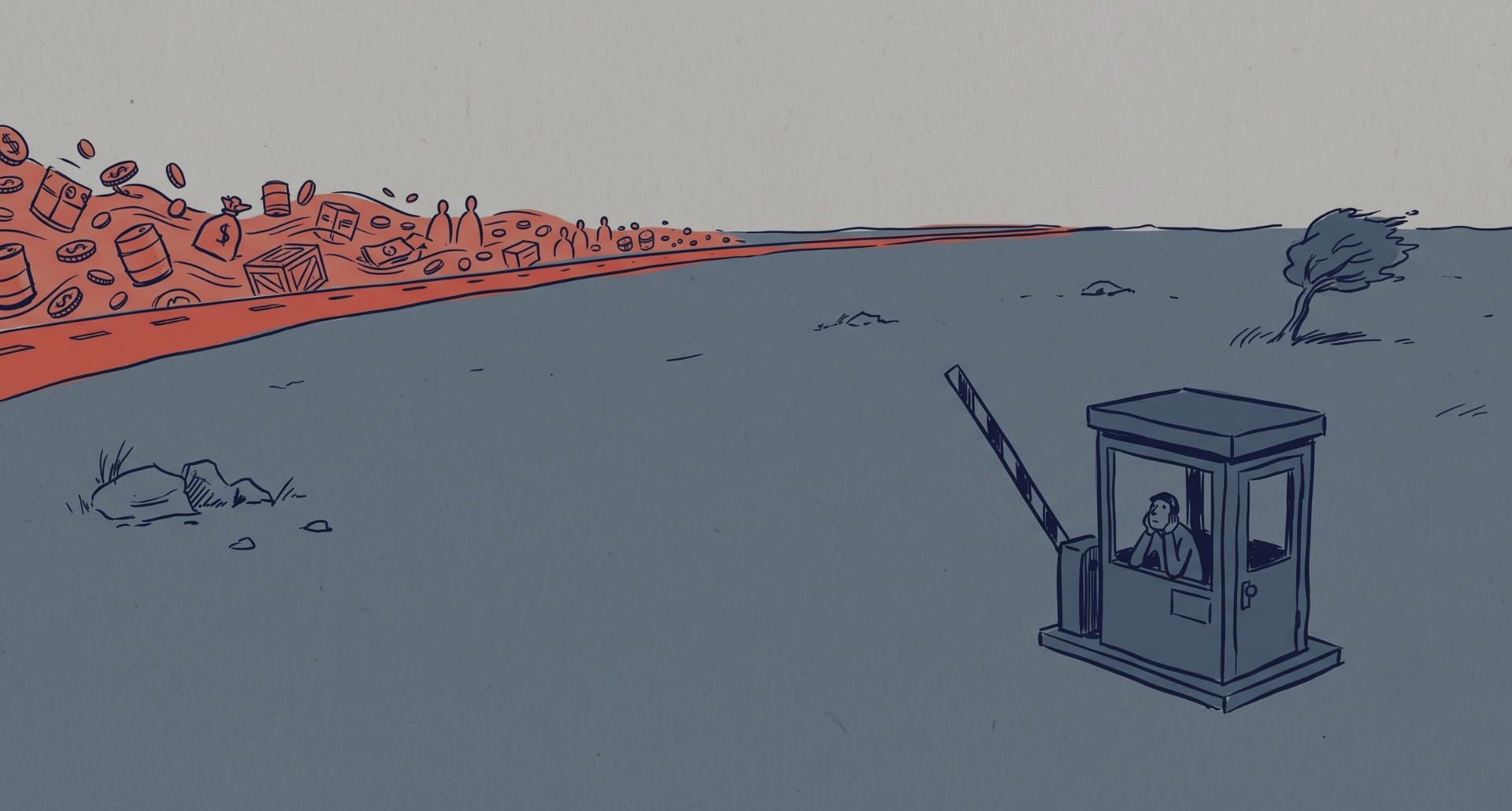
So we've walked the whole arc, and by now it probably reads like I'm telling every software founder in this industry to go become a toll booth, which I am not! Let’s ask two honest questions. First, can everyone aim for this? And second, does everyone need to?
Let’s now answer both.
First: in fact, not every software category can do this. The toll-booth move only works if there's a fat flow sitting underneath your software (procurement, payments, financing) that you're in a position to intermediate, but plenty of software isn't: it you sell a safety-inspection app, or a scheduling tool, or a niche analytics product that sits off to the side of where the money actually moves, there may be no flow for you to graduate onto. You can't toll a road that doesn't run past your booth. And that's the uncomfortable part: some categories are structurally relegated to just being software. Personally, I would not want to be there (with caveats, see below), because if the software is the whole business, and the software isn't hard to build, then every quarter brings another funded competitor and another AI-assisted clone, and you spend the rest of your life defending a sliver of a 1-to-3-percent budget against people willing to charge less than you.
Second: some software doesn't, in fact, need to do this, but only a tiny number qualify. These are the companies sitting where a genuine moat exists: real technical differentiation, the system of record, the canonical authoring tool, actual infrastructure that everyone else has to plug into. If you can plausibly become that (e.g. the file format the industry standardizes on, the environment the whole team reorganizes around) then ignore me. Build the platform, capture the ecosystem the way I argued here, and price like “infrastructure” forever.
But here's the thing: you probably aren't Autodesk, and you probably can't become it. Almost nobody can. Most software in this industry is neither the untouchable infrastructure at the top nor cleanly positioned over a flow it can graduate onto: it's a good, useful, clone-able point solution somewhere in the vast middle. For those founders (the 99 percent) the question is whether there's a toll booth within reach at all. If there is, take it!
So the honest framing isn't "software must become a toll booth”. Rather: in most of the project economy, if your SaaS subscription does sit on top of a real flow, it's a wildly under-monetized position, but capturing that flow is a different company, with a different balance sheet, a different cost structure, and almost always a different founder skill set, and the historical conversion rate from one to the other is brutal. It's a fork in the road. Which branch you take depends on where you're starting, who you are, whether there's a flow under you at all, and what your customers will actually pay for software. In India, the fork bends hard toward the flow, because pure SaaS caps out below the size of company you want to build. In the West, it's genuinely contested, and you have to make the call on the specific economics of your category.
Alright, let’s bring this home.
Conclusions
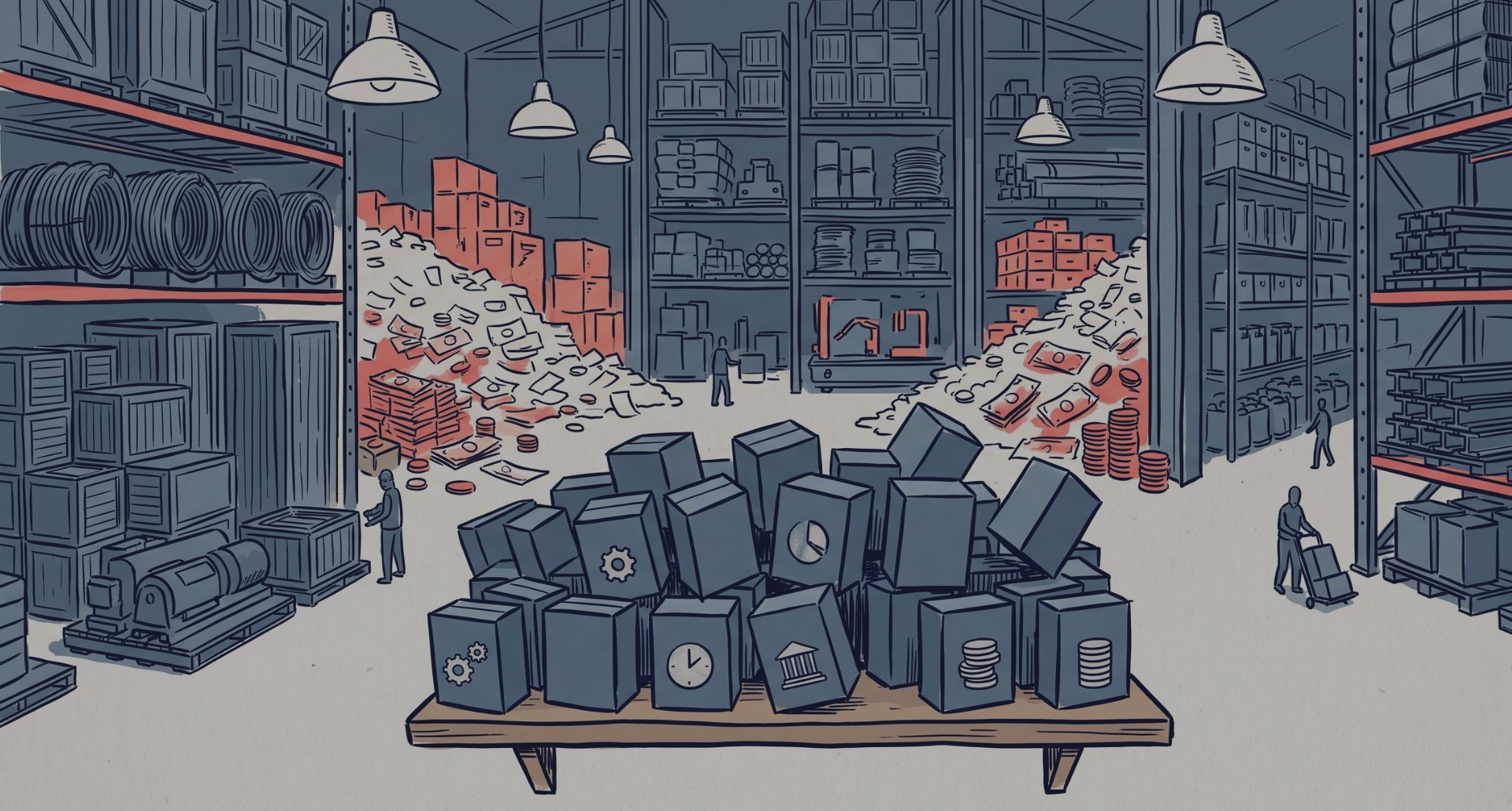
So, to bring it home.
Software sold into the project economy mostly earns a thin slice: a subscription against a 1-to-3-percent IT budget, while 97 percent of the customer's money moves through materials, labor, equipment, and the financing wrapped around them. For most founders, especially in low-WTP markets and especially as AI compresses software differentiation, that thin slice is a slow death. The way out is to treat the software as a wedge: embed in the workflow, then graduate from recording the flow to intermediating it, financing it, and eventually owning the supply outright.
There's no clean moat in this game: the software won't defend you, so the only real defensibility is motion → distribute the wedge fast, convert it into flow before anyone else gets embedded, and let the data lead compound.
And last, be honest about the two caveats. Not everyone can do this: no flow underneath your software, no toll booth to build. And a tiny few don't really need to: if you can become the canonical authoring tool or system of record, stay there and price like infrastructure. You probably can't. Almost nobody can.
For everyone in the vast middle, the real thing to internalize is this: the fat slice is a different company. Different balance sheet, different cost structure, different founder skill set, and the conversion rate from one to the other is brutal. But the prize sits on the 97 percent, not the 3: that, in my opinion, is worth the hard road.
If you're building something in this space, I'd love to hear about it, so don't be afraid to reach out!
More appetite for this type of content?
Subscribe to my newsletter for more "real-world" startups and industry insights - I post monthly!
Head to Foundamental's website, and check our "Perspectives" for more videos, podcasts, and articles on anything real-world and AEC.
#ConstructionTech #Contech #ProjectEconomy #EmbeddedFinance #FinTech #VentureCapital #IndustrialTech #SaaS