.png)

Most conversations about construction technology start from the same complaint: the industry is unproductive, and the fix is better software to tidy up its messy processes. Patric Hellermann, General Partner & Co-Founder at Foundamental, has argued that framing misses the point. Construction is an outcome economy. Nobody on a site is paid to run a slightly tidier workflow, they are paid to put things in place, and software covers barely two percent of where the money goes. The real question is about where the industry's enormous demand actually repeats in a standardized way, and which founders can build a supply that meets it.
That is the view he brings to the project economy: construction plus the adjacent capex markets, infrastructure, renovation and energy, that behave the same way. A fifteen trillion dollar market is growing five to six percent a year on data centers, energy, defense, and reindustrialization. Supply is the harder side. Western workforces are shrinking, materials have roughly doubled since 2020, and the old fix of adding bodies has run out of bodies.
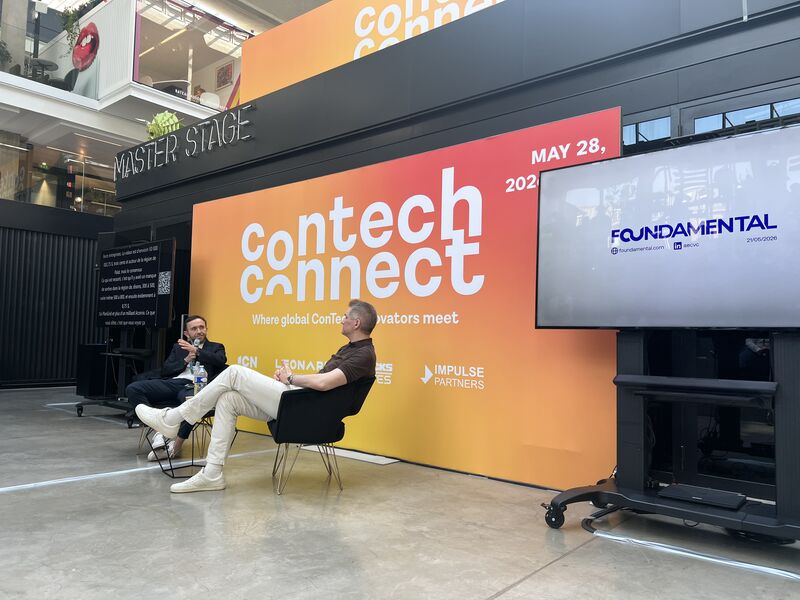
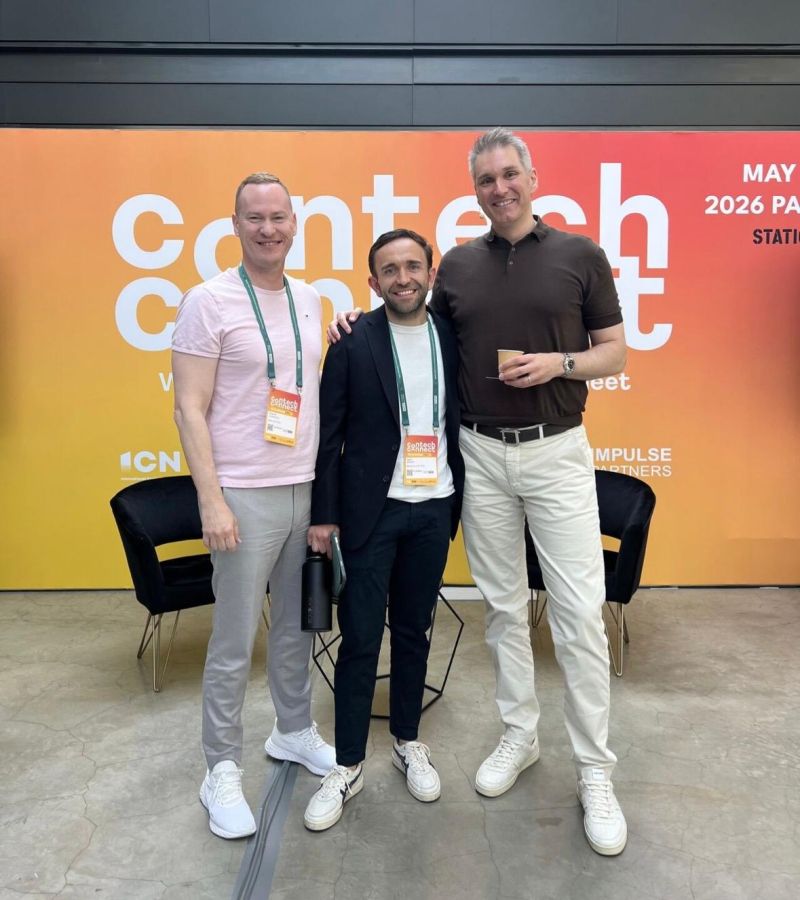
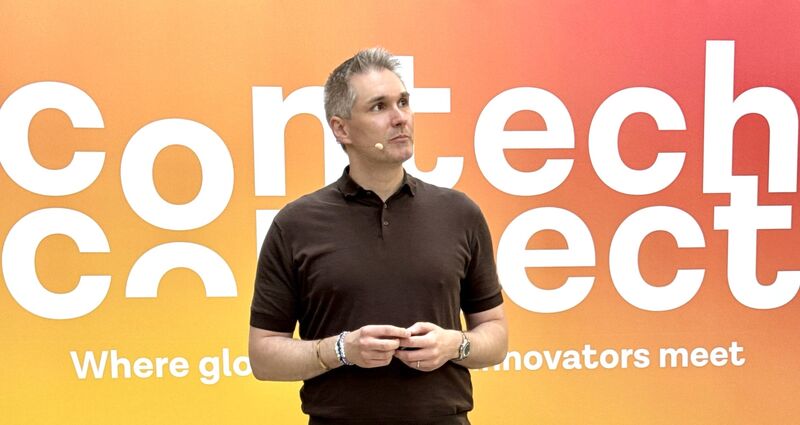
To talk through what that means for the next generation of construction tech companies, Patric Hellermann, General Partner at Foundamental, sat down with Owen of the Bricks & Bytes podcast on stage at Contech Connect in Paris. The two had recorded a long-form episode together that went on to become one of the show's most listened to for over a year, and Patric rarely appears at events, so the live format was its own occasion. France, he noted, is one of the five most important construction markets in the world.
What comes through across the conversation is a consistent set of bets. Patric is most interested in the integration layer that makes robotics work on a one of a kind site, in the data infrastructure that lets AI reach expert precision instead of a confident guess, and in the working capital plumbing of an industry that writes around ten billion invoices a year. He is just as clear about the founders he backs and the ones he passes on. The fireside chat below has been edited for length and clarity.
The quickfire round
Owen: "Let us start with a quickfire round. Yes or no, one word answers. AI bubble, yes or no?"
Patric: "Yes."
Owen: "Which is more overhyped in Europe, low carbon cement or modular construction?"
Patric: "Modular construction."
Owen: "One word for 2026?"
Patric: "France."
Owen: "The next construction tech unicorn: software, robotics, or a marketplace?"
Patric: "Robotics."
Owen: "Most underrated country for construction tech, and you cannot say the UK."
Patric: "The one punching most above its weight is Australia, then Israel. The most underrated might still be France. I know, I know how to play to the home crowd."
On founders
Owen: "You founded Foundamental in 2019. If you were starting again in 2026, what is one thing you would do differently, and you cannot say you would pick fintech instead."
Patric: "Probably founder obsession. The thing to realize when you first get into your own fund is that sometimes you only need to be directionally right. You do not need the perfect articulation of the perfect market thesis and the perfect product thesis. If you are directionally right and you have a team that will make it work, that is enough. That appreciation had to grow inside of me. I came from operating, then being an executive, and then moving into investing, and it is extremely different. Internalizing that earlier could have accelerated me by two or three years."
Owen: "So describe your ideal founder in 2026."
Patric: "I am looking for raw intensity, raw obsession. I am not looking for friendly, soft spoken, or a great salesperson. I am looking for raw intensity, so you can break through walls. Second, the ability to articulate an extremely grand vision but also reverse engineer the logical steps of getting there. Third, I love founders who are obsessed with bottlenecks and can name every one they need to remove. And fourth, founders who stand with both feet on the ground in their customer's reality, the ones who still sell in year ten themselves, the way they did in year one."
Raw intensity, a huge vision, the ability to reverse engineer it, an obsession with bottlenecks, and both feet in the customer's reality.
Owen: "How could a corporate buyer spot a red flag in a founder?"
Patric: "I call it riding the elevator. A great founder can ride up to the penthouse, the big vision, thirty kilometers to the horizon, and also ride down to the basement, into the machine room, and know every screw of the product. That connection is rare. When you meet a founder who is brilliant at the penthouse but has not figured out the machine room, you keep asking why. By the third, fourth, or fifth why, some of them start saying, yeah, but remember the ambition, or remember the vision. That is the reveal. They keep going up to avoid the question, because they did not think about the answer as deeply. So you keep asking, and you find out whether this is a vision pitch or whether it is grounded in reality."
On AI
Owen: "Is AI still the number one thing you see on pitch decks?"
Patric: "It is the same as seeing internet as the number one thing on pitch decks in 2001. You cannot be a company today without AI, because it is an infrastructural capability you need to own. Does that make you an AI first company? I do not think it has to. So I am seeing AI on every deck because I should. In a year I should not, the same way people stopped saying they were an internet enabled company. It just becomes a given."
Owen: "Your first reaction when you see AI on a deck?"
Patric: "Yes. So what?"
Owen: "You played the AI field cautiously between 2023 and 2025. Why?"
Patric: "We had a hunch that a lot of AI first companies would end up being a feature in someone else's platform, either swallowed by a universal horizontal model, or absorbed into someone's data infrastructure. At the time I did not know Anthropic would be what I would call a winner, but we knew someone would be. So instead of backing wrappers, we focused on the layer that holds the water, the data infrastructure for the project economy. Companies like Speckle, Quro, and Kestrel in the US. That said, this is just our investment taste. You can absolutely build a great outcome in AI."
On Europe, the US, and Asia
Owen: "We are in Paris. What is the construction tech story of continental Europe?"
Patric: "Ever since I started Foundamental, Europe has been at the forefront of materials innovation and robotics innovation, plus energy renovation. Less so on other fronts. If you want to learn supply chain and marketplace innovation, you go to Asia, India specifically, and China if you can. If you want the cutting edge of software and AI applied to construction, that is a US story, and it always has been. But materials, energy renovation, and robotics, that is Europe's story."
Owen: "What should a corporate buyer ask every startup before committing?"
Patric: "Two questions. First, explain your grand vision. If I buy you, why will you exist in three years? Second, now tell me what problem you are solving for me tomorrow. You will be surprised how few vendors can connect the two. Plenty are great at the big picture under a lot of assumptions, and even more are excellent at understanding today's customer problem. The connection between the two is the indicator that matters."
On the capital market
Owen: "What is your sentiment on the excitement and the big funding rounds in the industry right now?"
Patric: "Very high, but the variance of capital allocation is the highest it has ever been. We have roughly the same amount of venture capital in the market as in 2021, which was an absolute peak year. But it is concentrated in ten times fewer companies. The taper is more high variance than ever, which is why you see these very large rounds.
As a founder, that puts you into two buckets today. Either you build something so civilization level big that you can excite investors and absorb a massive amount of capital. Or you use one or two rounds, become profitable, and build a real business. And honestly, it has never been easier to build software. The amount you can ship in a week is insane. The conditions have shifted to the founder's advantage."
If you said ten years ago that you could build a billion dollar business, you got capital. Say it today and nobody funds you except small funds, because for everyone else the economics do not work.
Patric: "That is why I think a third category of venture capital is coming, one dedicated to the 250 to 500 million dollar outcomes. Those are life changing for founders and they are important companies for the industry, but today's capital concentration is chasing trillion dollar exits and orphaning that middle. The catch is you have to build capital efficient. You cannot justify a 500 million outcome on 100 million raised, but you can on 25 million. With AI, in many cases, that is now possible."
On construction robotics
Owen: "Tell us about robotics. Why does it excite you?"
Patric: "Think of the four types of supply: men, machines, materials, and money. Men and machines can be addressed by robotics. We will not meet the future demand for infrastructure, energy, data centers, highways, or vertical construction by throwing more bodies at it, because we are running out of bodies. The demographics in the West are dire. So machines will literally have to work for us."
Owen: "Where is the opportunity then, building the robots?"
Patric: "Founders tend to build one of two things in robotics. Either a hyper verticalized, monolithic solution, like bricklaying, where Monumental in our portfolio does a terrific job, but few of those have enough demand to address. Or a super horizontal company that hopes someone in construction eventually picks it up. I think the more interesting thing to build in 2027 is an integration layer.
In manufacturing, you do not get a site automated without systems integrators. You go to them and say, I have a unique factory, a unique shop floor, a unique process, a unique product. Does that sound like construction? Very unique. Systems integration exists because someone has to sit between the makers of robotics hardware and the operators, to design it, engineer it, come to your site, add the metal and the electrics, program the logic and the motion, and integrate it with your other systems. That is exactly what construction needs. We do not need a uniform supply of robotics. We need a uniform supply of integration."
Owen: "So it is like a forward deployed robotics engineer?"
Patric: "Exactly. I will design it, engineer it, find the right hardware from Europe or China, organize the supply chain, simulate it, program logic and motion, bring it to your site, demonstrate it, take your feedback, and do it again. Add the cages, feeders, transportation platforms, and the electrical work, then come back and show you it works across your company. And it is not new. We have done it for thirty five years in manufacturing. Without it, nothing works."
On data infrastructure
Owen: "Everyone is talking about a data infrastructure layer. What does it actually mean?"
Patric: "If you want AI to give you extremely precise results, you have to remember it is ultimately a probabilistic machine. It works through vectors to find the most probable next token. But in construction, you do not want probabilities for most decisions. You want the accuracy a highly trained expert would give you. Think of a bank. Would anyone use AI to calculate the interest a borrower owes today? No. You use a calculator, because that calculation is deterministic. There is one right answer.
Letting data flow is the same. If you can say this is the source of truth, this is the timestamp, it is transcribed into the system, then data infrastructure makes sure that information is used immutably across all your systems and your entire AI stack. You organize your data so it is ontologically and schematically uniform, and you eliminate the variance. That is what I am excited about."
Owen: "Gun to your head. Of your four themes, pre construction, data infrastructure, robotics, and working capital, where do you place your chips?"
Patric: "All four right now. But working capital is underserved, especially because fintech got orphaned as a category for two years, and investors moved their chips into AI. I am betting the fintech craze comes back, and construction needs money to move. There are about ten billion invoices written across construction every year. The working capital tied up at any point in time is in the trillion dollar range. If your financial infrastructure means fewer invoices get written and money moves faster, you are solving a huge problem."
In Patric's words
The thread through the whole conversation was the one Patric set up in his keynote: the project economy rewards standardization, not efficiency, and standardization happens on demand, not process. Construction is already standardized at its lowest unit, the bricks, the rebar, the nails, and the founders Patric looks for sell into the demand that already repeats everywhere.
The four areas that are mentioned are robotics integration rather than standalone robots, data infrastructure that lets AI run at expert precision, working capital that moves money faster, and the automation of pre construction. The founders who win on any of them tend to share the same traits: raw intensity, a grand vision they can reverse engineer, an obsession with bottlenecks, and both feet on the ground in the customer's reality.
Watch The Full Conversation